Spirent
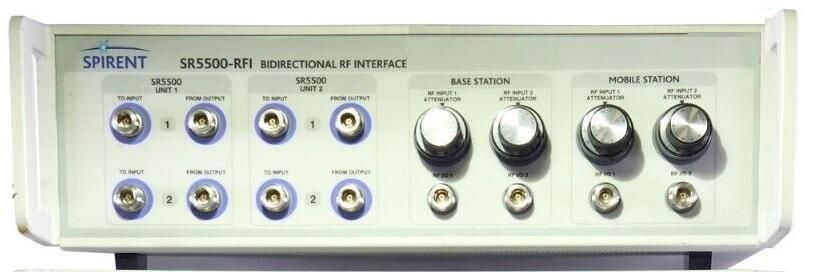
Spirent SR5500-RFI
Bidirectional RF Interface
400 MHz à 6 GHz Plage de fréquences
Jusqu'à 8 ports RF configurables Nombre de ports RF
0 à 127,75 dB par pas de 0,25 dB Atténuation dynamique
±0,5 dB (typique) Précision d'atténuation
50 Ohms Impédance caractéristique
2 100,00 € HT + livraison UE gratuite
| Attribut | Valeur |
|---|---|
| Plage de fréquences | 400 MHz à 6 GHz |
| Nombre de ports RF | Jusqu'à 8 ports RF configurables |
| Atténuation dynamique | 0 à 127,75 dB par pas de 0,25 dB |
| Précision d'atténuation | ±0,5 dB (typique) |
| Impédance caractéristique | 50 Ohms |
| Puissance d'entrée maximale | +23 dBm |
| Interface de contrôle | Ethernet (LAN), GPIB, USB |
| Alimentation électrique | 100–240 V CA, 50/60 Hz |
| Température de fonctionnement | 0 °C à +45 °C |
| Format mécanique | Châssis rack 19 pouces, 2U |
Key features of the bi-directional switch in the Spirent SR5500-RFI? include:
- Signal Routing: The bi-directional switch allows for the routing of signals in both directions between the device under test and the test equipment. It enables the system to seamlessly switch between transmitting and receiving signals during testing.
- Multiple Ports: The switch typically offers multiple ports to accommodate various connections. These ports can be connected to different devices, antennas, or test equipment, allowing for flexible configuration and testing setups.
- Fast Switching: The bi-directional switch is designed to provide fast and reliable signal switching capabilities. It ensures quick and efficient transition between different testing scenarios or configurations.
- Signal Integrity: The switch maintains signal integrity during the routing process, minimizing signal loss or degradation. It is designed to preserve the quality and accuracy of the signals being transmitted and received.
- Control and Synchronization: The switch can be controlled and synchronized with the testing system, allowing for coordinated signal routing and timing. This ensures accurate and synchronized testing of the device under test.