Stanford Research
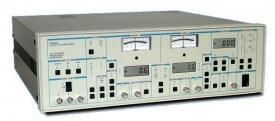
Stanford Research SR530
Lock-In Amplifier Dual Channel
0,5 Hz - 100 kHz Intervallo di Frequenza
Da 10 nV a 100 mV a piena scala Sensibilità
6 nV/√Hz a 1 kHz Rumore di Ingresso
Fino a 100 dB Riserva Dinamica
0,01° di stabilità tipica Stabilità della Fase
| Attributo | Valore |
|---|---|
| Intervallo di Frequenza | 0,5 Hz - 100 kHz |
| Sensibilità | Da 10 nV a 100 mV a piena scala |
| Rumore di Ingresso | 6 nV/√Hz a 1 kHz |
| Riserva Dinamica | Fino a 100 dB |
| Stabilità della Fase | 0,01° di stabilità tipica |
| Costante di Tempo | Da 1 ms a 100 s |
| Tipo di Ingresso | Singolo o differenziale (A, A-B) |
| Interfaccia di Comunicazione | IEEE-488 (GPIB) |
| Display | Display LED a quattro cifre per X, Y, R e θ |
| Alimentazione | 100/120/220/240 VAC, 50/60 Hz |
Stanford Research SR530 Options:
- SR530 - Option 01 - GPIB interface for SR510/SR530
- SR530 - Option 02 - Internal oscillator
| Model | Research |
|---|
STANFORD RESEARCH SR530 Amplifier (call for availability)The Stanford Research SR530 Lock-In, Dual Channel Amplifier can measure AC signals as small as nanovolts in the presence of much larger noise levels. Features and Specifications of the Stanford Research SR530 Lock-In Amplifier include: Two stages of time constants Dual Channel Low-Noise Cur and Voltage Inputs Up to 80 dB dynamic reserve Tracking band-pass and line filters Internal reference oscillator Four ADC inputs, two DAC outputs Optional GPIB and RS-232 interfaces Frequency Range: 0.5 Hz to 100 kHz Input Impedance: 100 MO Input Noise: 7 nV/vHz