Spirent
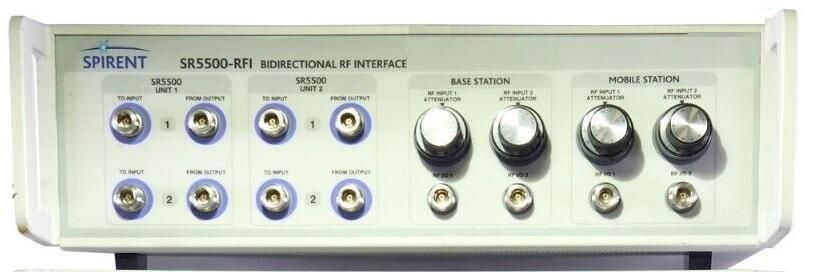
Spirent SR5500-RFI
Bidirectional RF Interface
400 MHz to 6 GHz Frequency Range
Up to 8 RF ports Number of RF Ports
Multi-channel fading and AWGN emulation Channel Emulation
LTE, WCDMA, HSPA, CDMA2000, WiMAX, Wi-Fi (802.11a/b/g/n) Supported Standards
ITU, ETSI, 3GPP, and custom user-defined fading profiles Fading Profiles
€2,100.00 excl. VAT + free EU delivery
| Attribute | Value |
|---|---|
| Frequency Range | 400 MHz to 6 GHz |
| Number of RF Ports | Up to 8 RF ports |
| Channel Emulation | Multi-channel fading and AWGN emulation |
| Supported Standards | LTE, WCDMA, HSPA, CDMA2000, WiMAX, Wi-Fi (802.11a/b/g/n) |
| Fading Profiles | ITU, ETSI, 3GPP, and custom user-defined fading profiles |
| Maximum Bandwidth | Up to 100 MHz instantaneous RF bandwidth |
| Dynamic Range | Greater than 100 dB |
| Noise Figure | Less than 10 dB typical |
| Interface | GPIB, LAN (Ethernet), and USB control interfaces |
| Form Factor | Rackmount chassis, 4U standard 19-inch rack compatible |
| Model | SR5500-RFI |
|---|
Key features of the bi-directional switch in the Spirent SR5500-RFI? include:
- Signal Routing: The bi-directional switch allows for the routing of signals in both directions between the device under test and the test equipment. It enables the system to seamlessly switch between transmitting and receiving signals during testing.
- Multiple Ports: The switch typically offers multiple ports to accommodate various connections. These ports can be connected to different devices, antennas, or test equipment, allowing for flexible configuration and testing setups.
- Fast Switching: The bi-directional switch is designed to provide fast and reliable signal switching capabilities. It ensures quick and efficient transition between different testing scenarios or configurations.
- Signal Integrity: The switch maintains signal integrity during the routing process, minimizing signal loss or degradation. It is designed to preserve the quality and accuracy of the signals being transmitted and received.
- Control and Synchronization: The switch can be controlled and synchronized with the testing system, allowing for coordinated signal routing and timing. This ensures accurate and synchronized testing of the device under test.