Stanford Research
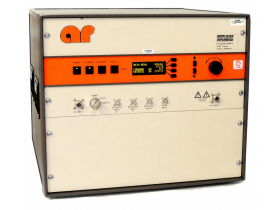
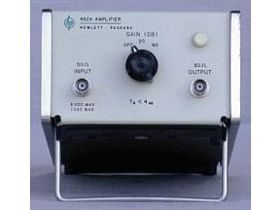
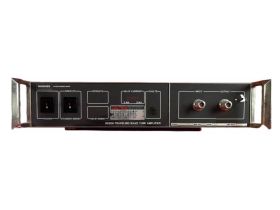
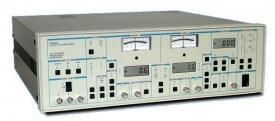
Stanford Research SR530
Lock-In Amplifier Dual Channel
0.5 Hz to 100 kHz Frequency Range
1 nV to 100 mV full scale Sensitivity
Up to 100 dB Dynamic Reserve
6 nV/√Hz at 1 kHz Input Noise
1st and 2nd harmonic detection capability Harmonic Detection
| Attribute | Value |
|---|---|
| Frequency Range | 0.5 Hz to 100 kHz |
| Sensitivity | 1 nV to 100 mV full scale |
| Dynamic Reserve | Up to 100 dB |
| Input Noise | 6 nV/√Hz at 1 kHz |
| Harmonic Detection | 1st and 2nd harmonic detection capability |
| Output Time Constants | 1 ms to 100 s |
| Reference Frequency Input | 0.5 Hz to 100 kHz, internal or external reference |
| Signal Input | Single-ended or differential (A, B, or A-B modes) |
| Output | Two DC outputs: X (in-phase) and Y (quadrature), ±10 V full scale |
| Interface | IEEE-488 (GPIB) interface for remote operation |
Stanford Research SR530 Options:
- SR530 - Option 01 - GPIB interface for SR510/SR530
- SR530 - Option 02 - Internal oscillator
| Model | Research |
|---|
STANFORD RESEARCH SR530 Amplifier (call for availability)The Stanford Research SR530 Lock-In, Dual Channel Amplifier can measure AC signals as small as nanovolts in the presence of much larger noise levels. Features and Specifications of the Stanford Research SR530 Lock-In Amplifier include: Two stages of time constants Dual Channel Low-Noise Cur and Voltage Inputs Up to 80 dB dynamic reserve Tracking band-pass and line filters Internal reference oscillator Four ADC inputs, two DAC outputs Optional GPIB and RS-232 interfaces Frequency Range: 0.5 Hz to 100 kHz Input Impedance: 100 MO Input Noise: 7 nV/vHz