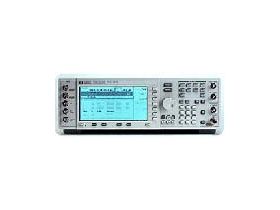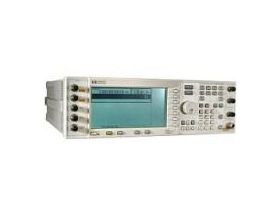
Stanford Research
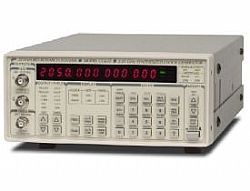
Stanford Research CG635
2.05 GHz Function Generator
DC to 2.05 GHz Frequency Range
Programmable LVDS and PECL levels Output Amplitude (LVDS/PECL)
CMOS: 3.3 V or 5 V; Sine: -13 dBm to +13 dBm into 50 Ω Output Amplitude (CMOS/Sine)
-148 dBc/Hz at 10 kHz offset (at 10 MHz) Phase Noise
1 µHz Frequency Resolution
| Attribute | Value |
|---|---|
| Frequency Range | DC to 2.05 GHz |
| Output Amplitude (LVDS/PECL) | Programmable LVDS and PECL levels |
| Output Amplitude (CMOS/Sine) | CMOS: 3.3 V or 5 V; Sine: -13 dBm to +13 dBm into 50 Ω |
| Phase Noise | -148 dBc/Hz at 10 kHz offset (at 10 MHz) |
| Frequency Resolution | 1 µHz |
| Output Connector | SMA (front panel) |
| Timebase Reference | Internal TCXO or external 10 MHz reference input |
| Interface | RS-232 and GPIB (IEEE-488) |
| Power Requirements | 100–240 VAC, 50/60 Hz, 20 W maximum |
| Operating Temperature | 0 °C to 40 °C |
Stanford Research CG635 Options:
- CG635 - Option 01 - PRBS w/ complementary LVDS outputs on SMA
- CG635 - Option 02 - OCXO timebase
- CG635 - Option 03 - Rubidium timebase
| Model | CG635 |
|---|
The CG635 generates extremely stable square wave clocks between 1 ?Hz and 2.05 GHz. The instrument's High Frequency Resolution, low jitter, fast transition Times, and flexible Output levels make it ideal for use in the development and testing of virtually